



The charter skipper is a craftsman pur sang. The skipper’s knowledge and skills, as well as the way he works with his vessel, crew, passengers, and the natural elements, make this profession truly special. The Knowledge Centre for Intangible Cultural Heritage recognizes this and, during a special gathering on 20 March 2024 in Enkhuizen, added the craftsmanship of the charter skipper to the Inventory of Intangible Cultural Heritage under the designation “Skipper of the Brown Fleet.”
Description
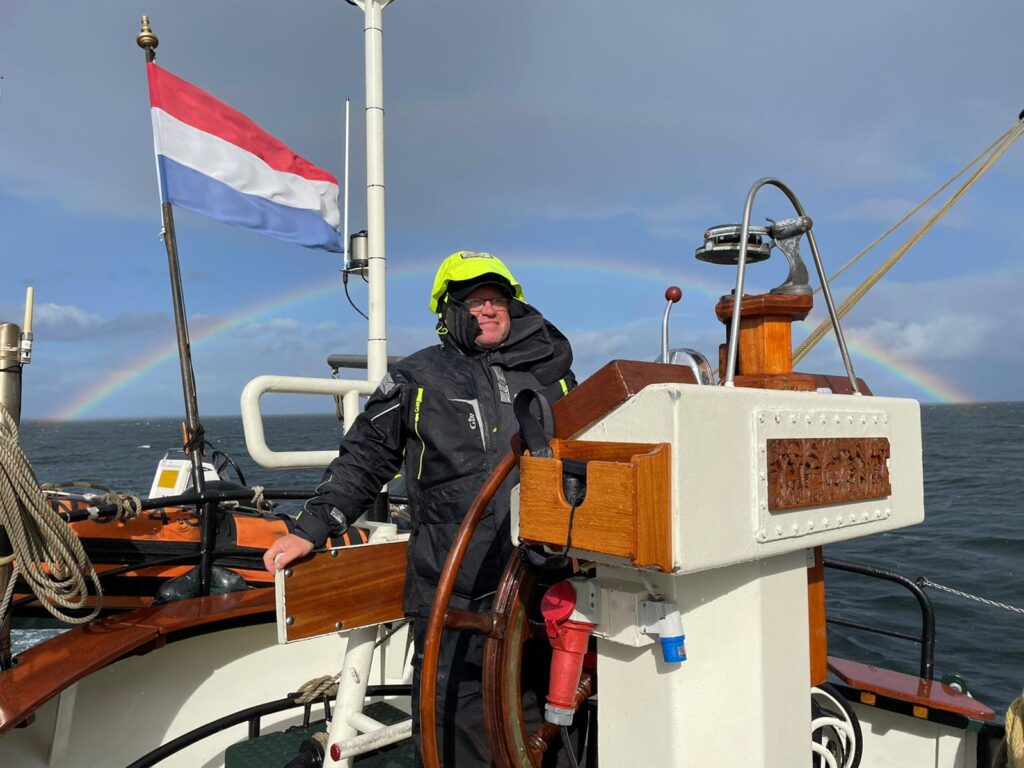
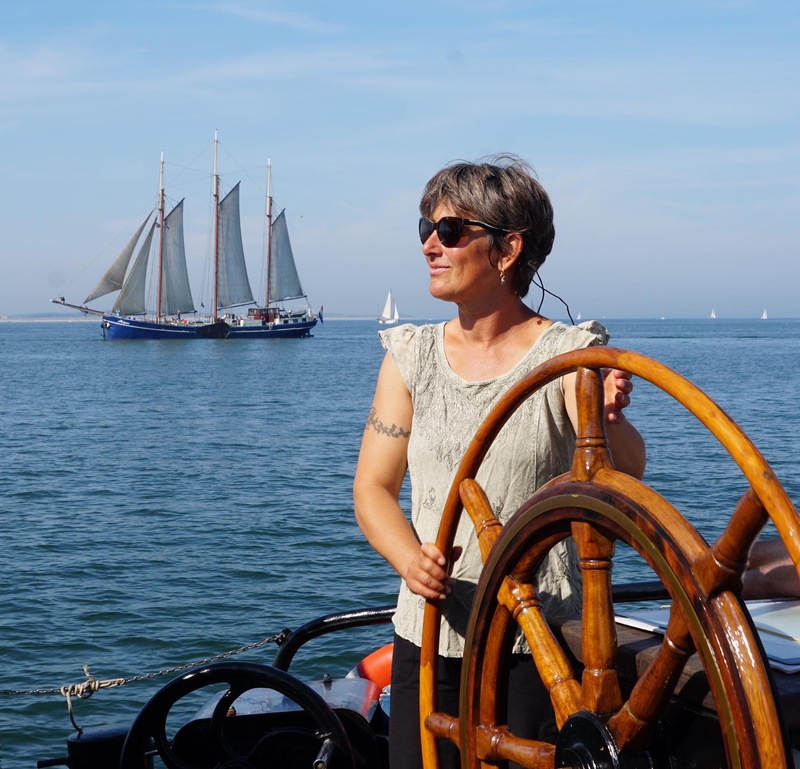
The skipper of the Brown Fleet sails with passengers on traditional vessels for recreational and/or educational purposes. The charter fleet of the Netherlands, also known as the Brown fleet, consists of historic sailing inland and seagoing vessels. Together with the crew, the skipper is responsible for the safety of the guest crew and for ensuring that travel over water is as sustainable as possible.
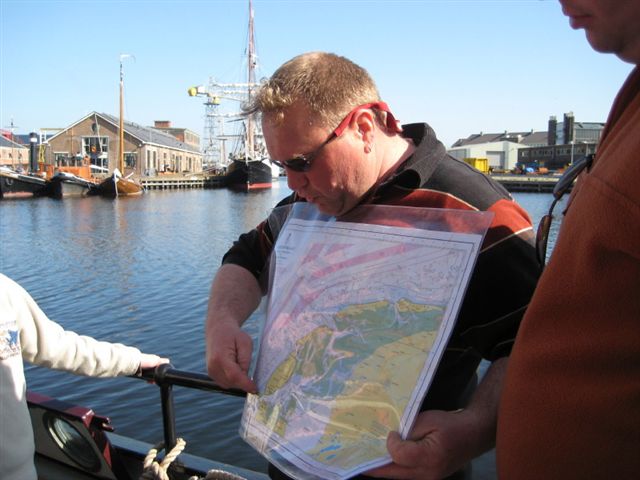
This requires specific knowledge and skills relating to the vessel, navigation, and meteorology. In addition, the skipper possesses extensive knowledge of nature, geography, and the surrounding environment, as well as social skills that are essential for guiding passengers.
Passengers often take an active part in the day-to-day running of the vessel. Under the guidance of the crew, they set sails, trim the ship, climb the rigging, handle the leeboards, or take part in watch duties. Participation is always voluntary: on board, the guiding principle is that everyone is involved in a way that matches their wishes and abilities.
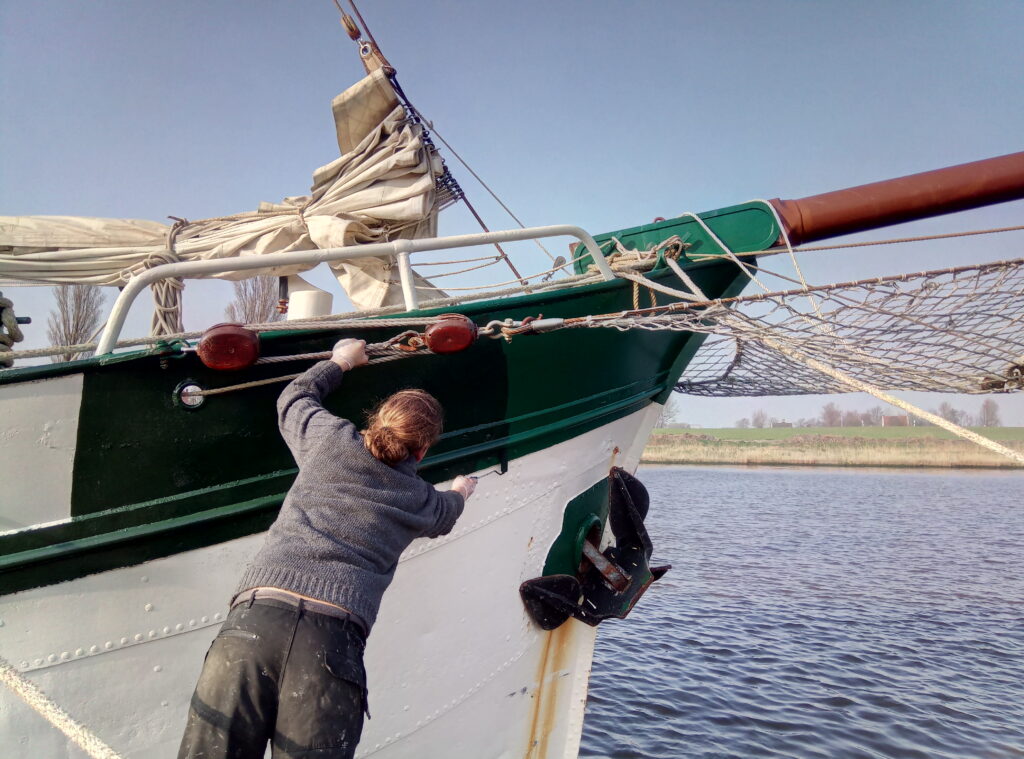
The profession also includes the maintenance and technical preservation of the vessel. During periods when sailing does not take place—often in the winter months—sails are inspected and repaired, and tasks such as rust removal, painting, varnishing, and cleaning are carried out. During periodic inspections, more extensive work is also performed, applying knowledge of traditional shipbuilding techniques.
Skippers and crew also undertake training and refresher courses. All skippers of the Brown Fleet are trained and certified, but practical experience forms the core of their craftsmanship. Every skipper began as a mate or deckhand and learned the profession on board, including the professional jargon, sailing operations, maneuvering, mooring, and directing passengers.
The historic vessels of the Brown Fleet, sailing for Rederij van Linschoten, form a defining feature of many Dutch harbor cities. While underway, they make a visible contribution to the maritime cultural landscape. At international maritime events, such as Sail festivals, they attract audiences of millions each year.
Practitioners and stakeholders
Approximately 1,700 owner-skippers, employed skippers, and mates/deckhands are affiliated with the BBZ, the trade association for skippers and professionals within the Brown Fleet, which initiated this nomination. About half of the sailing inland vessels are members of the BBZ; within seafaring, this percentage is even higher.
Skippers consciously choose this profession out of a deep connection with sailing, the historic vessels, and the combination of skills the craft requires. Many view the profession as a way of life; some even live on board their ships. When the vessels are not sailing, they are moored in harbors where fellow skippers meet. This shared practice fosters strong mutual bonds and camaraderie.
The skippers of the Brown Fleet are closely connected to other aspects of Dutch maritime heritage through maritime training institutes, museums, specialized craftsmen, historic harbors, and shipyards. At the same time, they serve as a bridge to the contemporary maritime sector.
History and Development
Charter sailing already took place on a limited scale from the second half of the nineteenth century, when affluent citizens were able to persuade cargo skippers, for a fee, to undertake recreational trips. In the 1960s and 1970s, many traditional cargo and fishing vessels lost their economic function due to scaling up and mechanization. A scrapping scheme resulted in a large number of ships disappearing.
A portion of these vessels, however, was preserved and given a new purpose. For some skippers, charter sailing provided an alternative source of income and the preservation of their living space; other ships were purchased by groups with a strong interest in historic vessels and an alternative lifestyle. Restoring and returning these vessels to sail required significant investment, which could be recouped through passenger voyages.
From the late 1970s, the sector became more professionalized. In 1978, the Enkhuizen Maritime School began offering training for the Brown Fleet, and in 1979 the trade association for professional charter sailing was established. At the same time, Bureau Zeilwezen was created, conducting inspections and supervision from within the fleet itself, based on expertise in traditional shipping.
From the 1980s and 1990s, attention to comfort and on-board facilities increased. Some vessels underwent extensive renovations, while others largely retained their original character. As a result, the Dutch Brown Fleet today encompasses a great diversity of ships.
Many of these vessels, alongside other charter offices, are affiliated with Rederij van Linschoten. The company handles the commercial tasks, such as advertising and managing contracts with clients. This allows the skippers and captains to focus on what they do best: sailing, preserving our maritime heritage, and ensuring an enjoyable vacation experience for their guest crew on board.
Experience the living heritage of the Brown Fleet up close
The most authentic way to experience this intangible heritage is by sailing yourself. During a sailing holiday with a skipper from Rederij van Linschoten, you get a close-up experience of the craftsmanship, life on board, and the rhythm of wind and water. As a guest crew member, you become part of a living tradition, where actively participating is just as natural as enjoying the journey. Choose one of our co-sailing trips or book a traditional sailing vessel for your own group and step on board.