



A Journey Never to Forget! An Account of Marieke’s Experience.
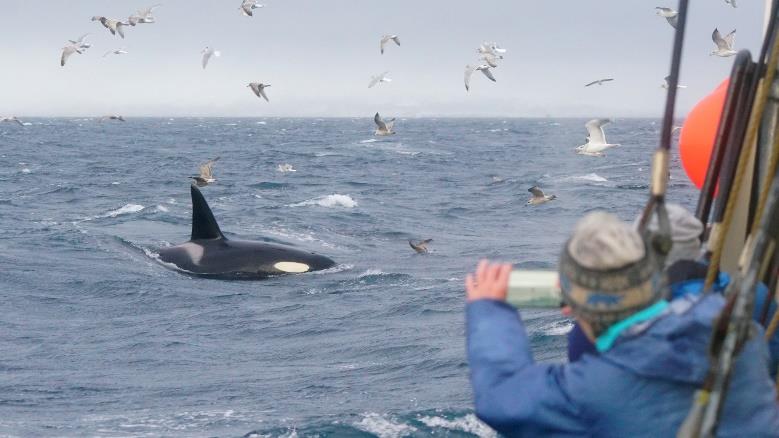
“Don’t get too cold,” one of the regular crew members tells me, and shortly after, I head inside, having just taken a photo of the orcas that have been swimming alongside the ship for nearly half an hour. I descend into the belly of the ship, into the cozy warmth. Inside, the ship isn’t particularly large, but it’s wonderfully warm. And that’s not all—the cook is busy preparing lunch. Today, he’s making a hearty soup and freshly baked braided bread. It smells amazing.
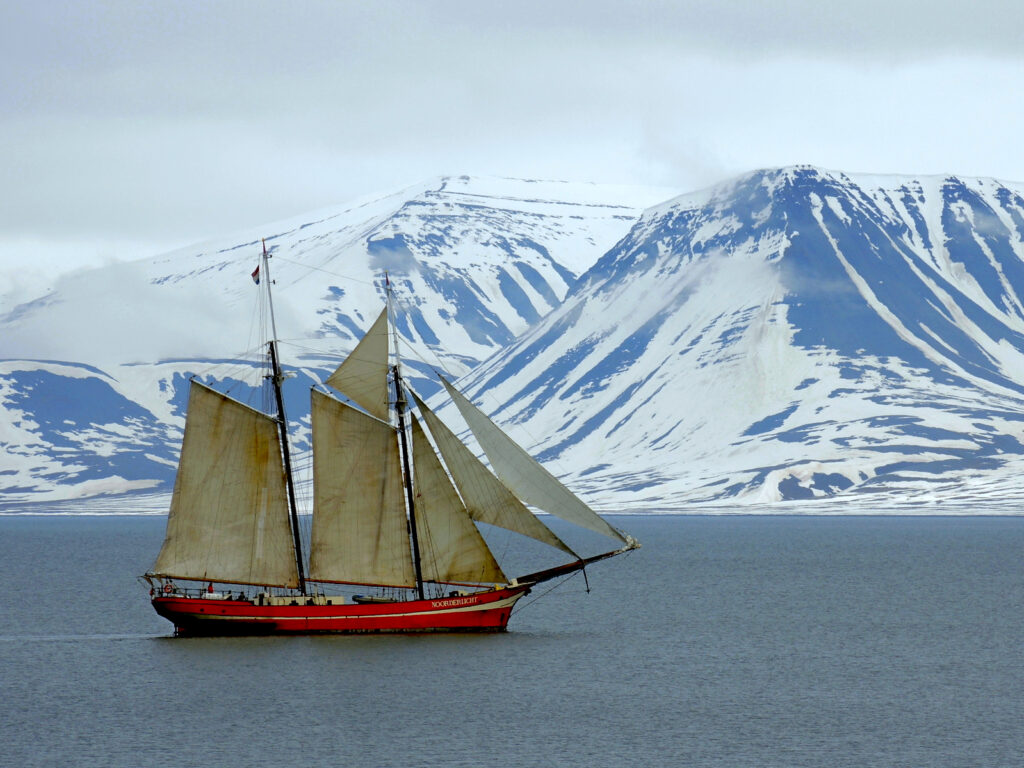
We are sailing to the Arctic regions on a traditional sailing ship. I had been looking forward to this journey for a long time, and now the time has finally come—I’ve booked the trip. We have been sailing toward our destination for several days, and everything is going smoothly, as the wind is in our favor and the waves are very low since we are sailing close to the coast. I am curious to see what this journey will bring for all of us.
Experience at sea
The officers of the sailing ship are experienced and well-trained for this work. Before becoming officers, they had already spent many days at sea and, in addition to the theoretical knowledge gained in school—navigation, weather, sailing, rigging, electronics, and engineering—they acquired extensive skills and experience. Yet I still wonder: how does one learn to sail to the Arctic regions? I ask the first mate.
The first mate, who, by the way, is a woman, answers my question by saying that it comes from experience on previous voyages and the transfer of knowledge between the different crew members. This is in addition to the general knowledge she gained at the Enkhuizer Seafaring School. She also says that trips to the Arctic regions are among her favorite journeys. The vast, cold areas—with their often intensely clear skies and deep fjords—are simply more than beautiful; they are often still untouched by humans.
“And the cold?” I ask, since I had just been outside, and the longer we sail toward our destination, the more the temperature drops. She laughs and says that cold is an emotion—a sailor’s joke, which is clear to me. Then she continues more seriously: “You can dress well for the cold there: many layers of clothing, starting with good thermal underwear. But beyond clothing, it’s important to take care of yourself and the other people on board. Don’t stay outside too long—just switch watches a bit more often. Eat well so you have enough energy. And send the others inside as soon as they start feeling cold. Like you,” she says with a broad smile and her rosy-red cheeks.
From the ship into a small boat
A few hours later, as we get closer to land, we lower the sails together and proceed carefully under motor. Several crew members stand watch for icebergs. In the bay, the anchor is dropped. I’m struck by how clear the water is! We can smell the land—a different scent from the sea. Truly special and impressive. The beautiful, untouched nature. I’m in love all over again.
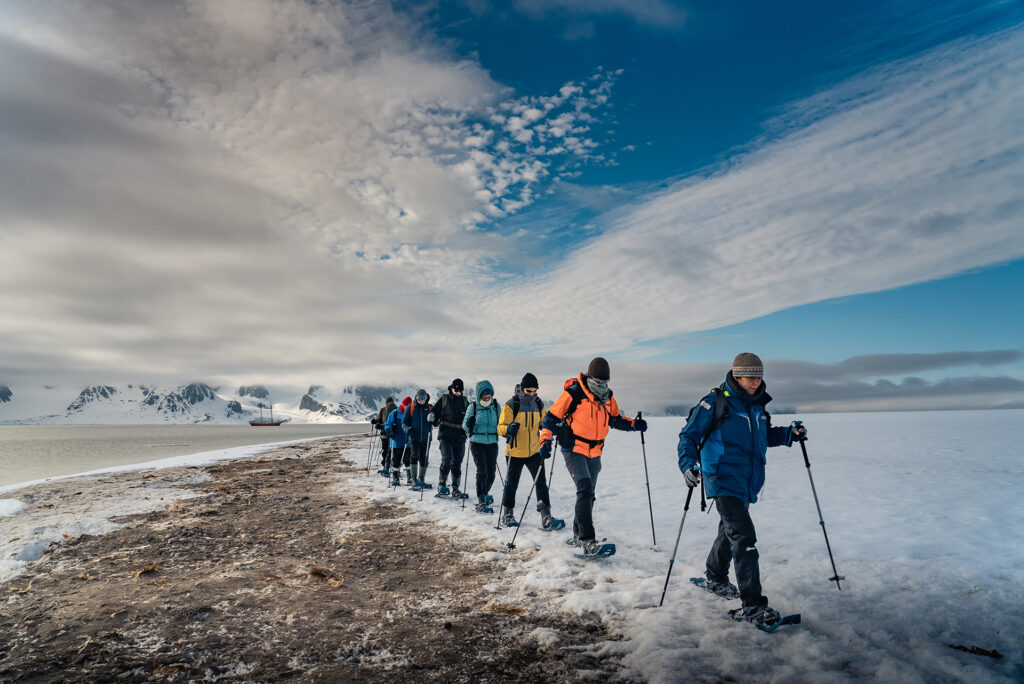
We board a small boat with a few people—in nautical terms, a RIB—and head toward the shore. Once there, we walk along the water under the guidance of one of the armed crew members. He is our guide and shares all kinds of information about what we see and encounter along the way. So it’s not only a pleasure to experience, but also a very informative and educational outing.
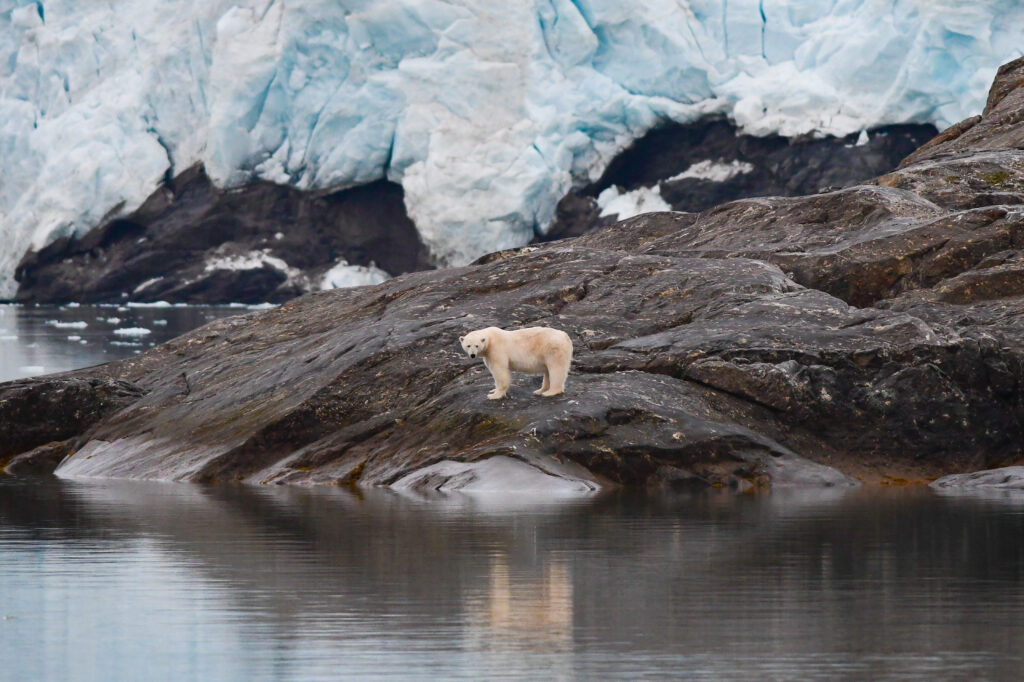
Why bring a gun? Clearly, it’s not for cannibals, but polar bears are present throughout the entire polar region, and we are, of course, potential prey.
With a gun, you can scare off a polar bear, and in this way, we as guests on the island are well protected by the crew.
Because the ship we are traveling on has sailed most of the journey, the trip is quite sustainable. I appreciate that, because even though I want to make this beautiful journey to this remote corner of the world, it feels good knowing that the impact on the environment in this delicate area remains low. On board the sailing ship, we are largely self-sufficient: there is a water maker, and the cook bakes bread and prepares the meals. We cannot live entirely without fossil fuels on board, as it would get too cold. But it comforts me that the consumption is minimal and that waste is carefully managed.
I will definitely go again—will you?
The blue skies, the magical ice, and the polar lights. Almost uninhabited and often untouched by humans.
Since childhood, many people have been fascinated by the North and South Pole regions—these stunning areas at the ends of our Earth. They are simply breathtaking. There are many ways to visit and experience these places. At Rederij van Linschoten, there are special trips that sail to the Arctic regions. A journey never to forget! I will definitely go again.
Do you also dream of a sailing expedition in the polar regions? Rederij van Linschoten can make these dreams come true—the booking process was easy, and all my questions were answered thoroughly and promptly.